
Acne & Scarring
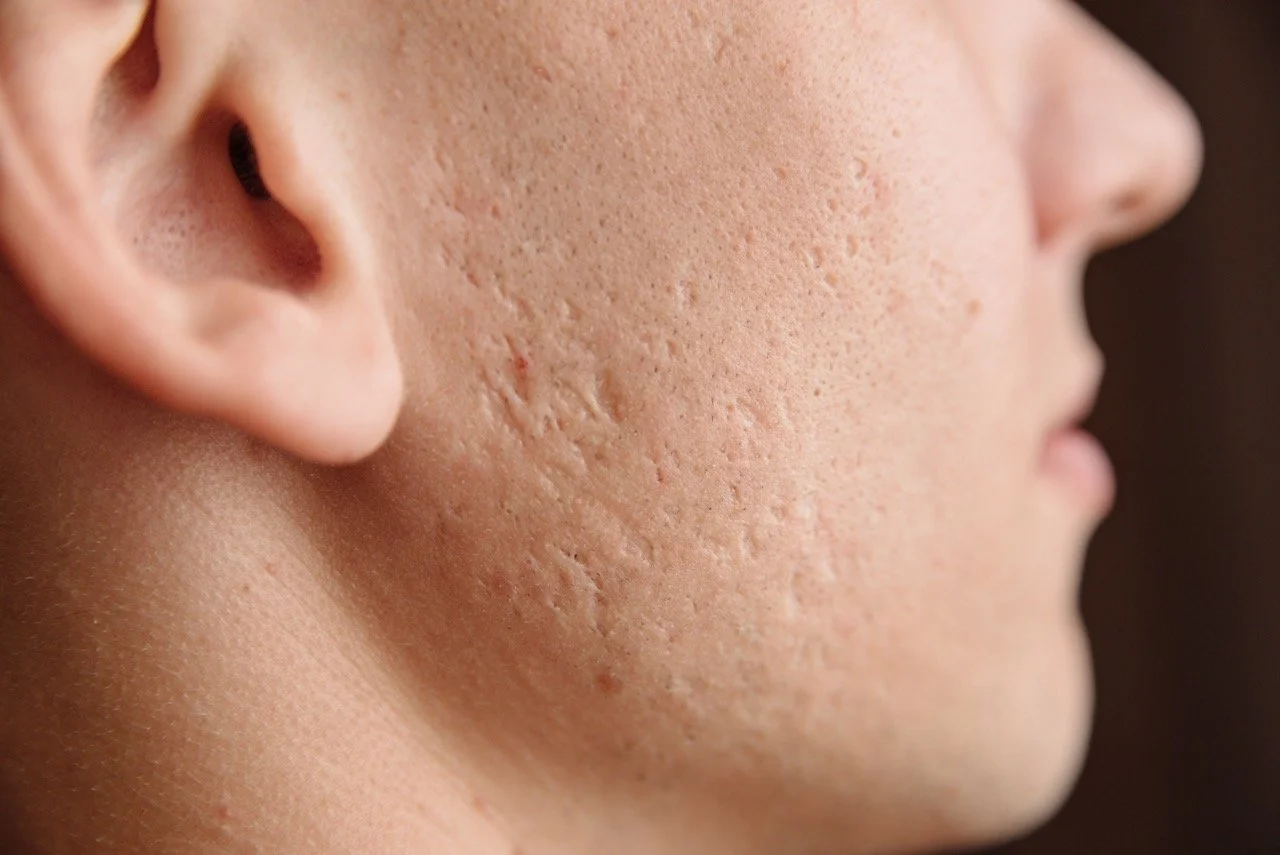
How Acne & Scarring Forms
The transition from a breakout to a permanent scar involves several biological stages:
Excess Sebum & Blockage: Overactive sebaceous glands produce too much oil, which mixes with dead skin cells to plug the follicle, creating blackheads and whiteheads.
Bacterial Growth: The bacterium Propionibacterium acnes (P. acnes) thrives in these blocked glands, leading to the redness and swelling characteristic of spots.
Inflammatory Damage: Severe acne, such as large nodules or cysts, causes significant inflammation deep within the dermis. This inflammation destroys the healthy skin structure.
Disrupted Healing: As the body heals the wound, it replaces the damaged tissue with collagen. "Atrophic" scars (indentations) form when there is a loss of tissue, while "Hypertrophic" scars (raised marks) occur when the body produces an excess of collagen.
What is Acne & Scarring?
Acne is a chronic inflammatory condition affecting the sebaceous hair follicles, most commonly found on the face, neck, chest, and back. It occurs when oil glands produce excessive sebum, which, combined with dead skin cells and bacteria, leads to blockages and inflammation. When these inflammatory breakouts penetrate deeply into the skin, they can damage the underlying tissue. As the skin attempts to heal, it produces collagen; if the body produces too much or too little, it results in permanent marks known as acne scars, which can appear as depressions or raised textures on the skin.
How to Treat Acne & Scarring
At Home: Jolanta’s Advice
Managing acne requires a disciplined routine to control oil production and protect the skin's barrier:
Gentle Cleansing: Wash your face twice daily with an appropriate cleanser to remove excess oil and debris without stripping the skin.
Active Ingredients: Incorporate non-comedogenic products containing Salicylic Acid or Benzoyl Peroxide to keep pores clear and reduce bacterial load.
Strict Hands-Off Policy: Never pick or squeeze blemishes. This increases deep-seated inflammation and is the primary cause of permanent scarring.
Daily Sun Protection: UV exposure can darken existing scars (post-inflammatory hyperpigmentation), making them more difficult to treat. Apply a broad-spectrum SPF 30+ daily.
At SCA Clinic
We provide clinical-grade treatments to clear active congestion and remodel the skin’s surface to reduce the appearance of scars:
Prescribed Facials: Customised treatments designed specifically for your skin's current level of congestion and sensitivity.
Chemical Peels: Professional peels exfoliate the surface and penetrate deep into the pores to clear blockages and improve overall skin texture.
WOW Fusion Facial: A bespoke cocktail of vitamins and skin-clearing ingredients delivered via micro-channeling to revitalise the complexion.
RF Microneedling (Sylfirm X): This combines traditional microneedling with radiofrequency energy to stimulate deep collagen production, which is highly effective for "plumping" out atrophic acne scars.
Fractional CO2 Laser: A powerful resurfacing tool that removes damaged skin layers and triggers the body’s natural repair process to smooth out deep-set scarring.
For the best results and choice of treatment, book a consultation with Jolanta, Aesthetic Nurse Practitioner, to create a personalised treatment plan.
