
Hair Loss
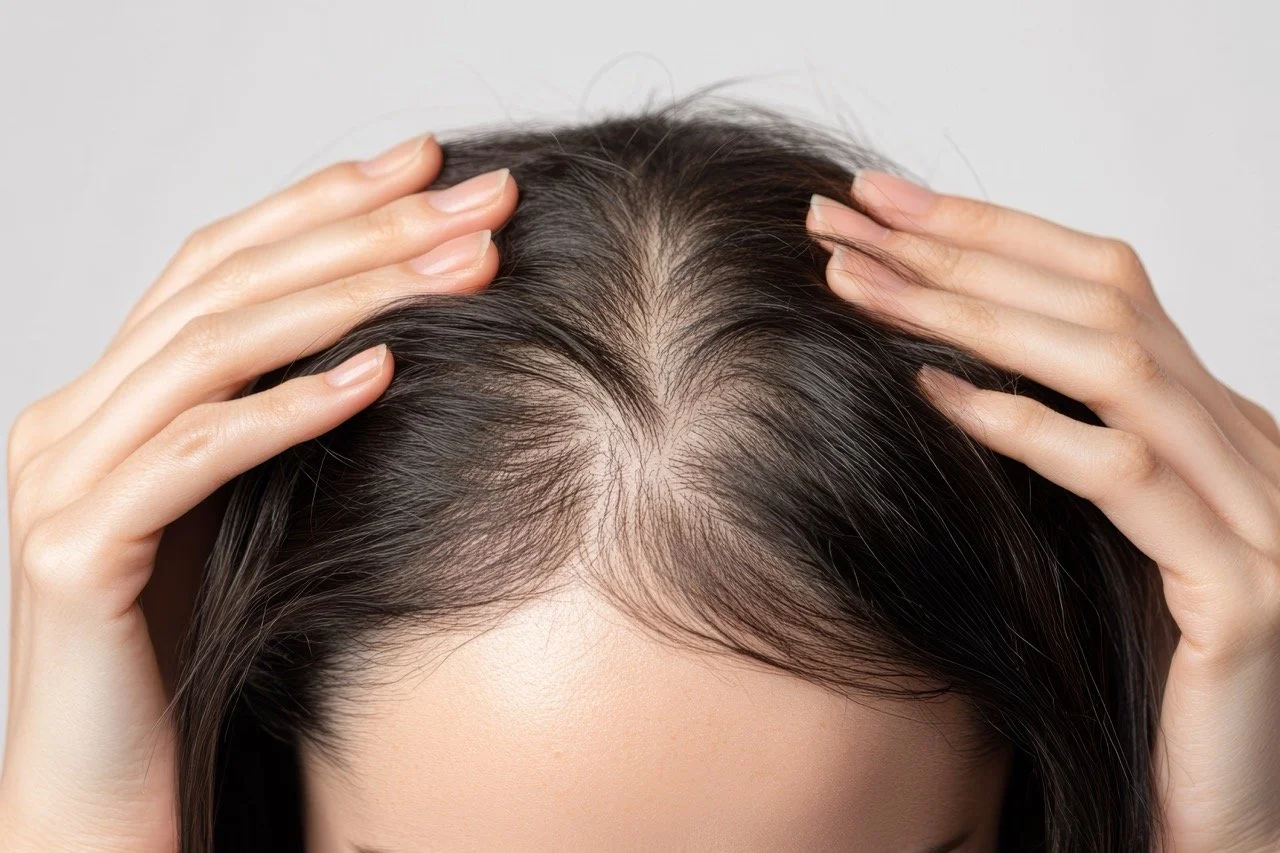
How Hair Loss Forms
Hair growth follows a natural cycle of growth (anagen), transition (catagen), and resting (telogen). Hair loss occurs when this cycle is disrupted or when the hair follicle itself is compromised:
Androgenetic Alopecia: This is the most common cause, often referred to as male or female pattern baldness. It is driven by genetics and a sensitivity to dihydrotestosterone (DHT), a hormone that causes hair follicles to shrink (miniaturise) until they stop producing hair.
Telogen Effluvium: A temporary form of hair loss triggered by physical or emotional stress, illness, or hormonal shifts (such as post-pregnancy). It pushes a large number of hairs into the resting phase simultaneously, leading to noticeable thinning.
Scalp Health & Inflammation: Conditions like seborrheic dermatitis or a buildup of styling products can inflame the scalp and clog follicles, hindering healthy hair growth.
Nutritional Deficiencies: A lack of essential nutrients, particularly iron, biotin, and protein, can weaken the hair shaft and cause premature shedding.
Ageing: As we age, the rate of hair growth slows, and follicles can become less active, leading to a natural decrease in hair density.
What is Hair Loss?
Hair loss, or alopecia, is a condition that affects millions of people across the UK and Ireland, impacting both men and women at various stages of life. It can manifest as thinning hair, a receding hairline, or patchy baldness. Because our hair is often closely tied to our sense of identity and self-image, experiencing hair loss can be emotionally distressing and lead to a significant decline in confidence. Understanding that hair loss is a biological process—often related to genetics, hormones, or scalp health—is the first step toward managing it effectively.
How to Treat Hair Loss
At Home: Jolanta’s Advice
Supporting your hair from the root up requires a combination of nutritional support and scalp care:
Optimise Your Nutrition: Ensure your diet is rich in iron, zinc, and Vitamin B12. Consider high-quality supplements designed for hair health, such as those containing Biotin or Marine Collagen.
Scalp Stimulation: Regular, gentle scalp massages can help increase blood flow to the follicles, ensuring they receive the oxygen and nutrients needed for growth.
Use Professional-Grade Topicals: Incorporate caffeine-based shampoos or serums that help to stimulate the scalp and strengthen the hair shaft
Minimise Heat and Chemical Stress: Avoid excessive heat styling and harsh chemical treatments, which can cause breakage and further thin the appearance of your hair.
At SCA Clinic
We offer advanced clinical treatments designed to revitalise dormant follicles and improve the environment of the scalp:
Platelet-Rich Plasma (PRP) Therapy: Often called "Vampire Hair Restoration," this treatment uses your own growth factors to stimulate dormant follicles, increase blood supply to the scalp, and thicken existing hair shafts.
Polynucleotides: An innovative regenerative treatment that uses DNA fractions to repair and renew cells at a deep level, providing a powerful "bio-stimulatory" effect for thinning hair.
Mesotherapy: A series of micro-injections delivering a bespoke cocktail of vitamins, minerals, and DHT-blockers directly into the scalp to nourish the hair at the root.
Microneedling: By creating controlled micro-channels in the scalp, we trigger a healing response that can stimulate hair growth factors and improve the absorption of topical growth serums.
Exosome Therapy: A cutting-edge treatment using signalling molecules to communicate with scalp cells, encouraging repair and revitalisation of thinning areas.
For the best results and choice of treatment, book a consultation with Jolanta, Aesthetic Nurse Practitioner, to create a personalised treatment plan.
