
Hyperpigmentation & Age Spots
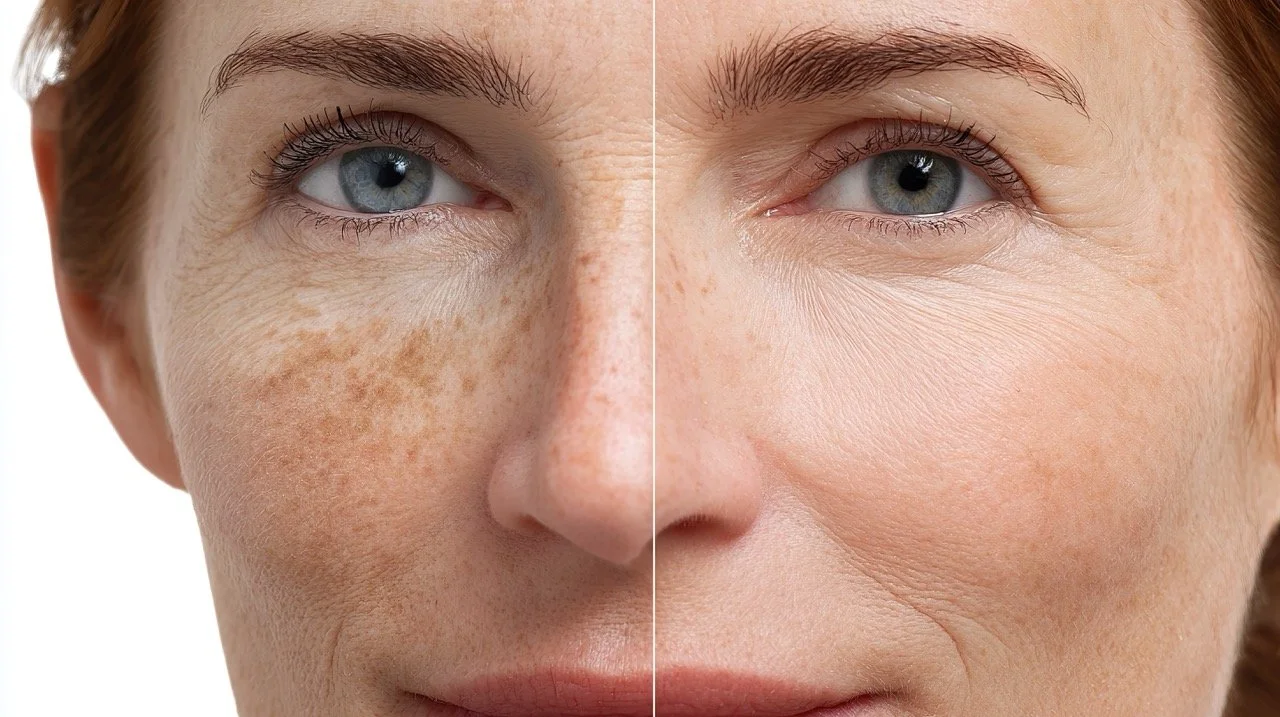
What is Hyperpigmentation & Age Spots?
Hyperpigmentation is a common skin concern where certain areas of the skin become darker than the surrounding tissue. This occurs when an excess of melanin—the brown pigment that produces normal skin colour—forms deposits in the skin. Age spots, also known as liver spots or solar lentigines, are a specific form of hyperpigmentation. They appear as small, flat, darkened patches ranging from light brown to black. While they are harmless, these patches can lead to an uneven skin tone and are often associated with premature ageing, causing many patients to seek a clearer, more radiant complexion.
How Hyperpigmentation & Age Spots Form
The overproduction of melanin is typically a defensive or reactive response by the skin to various internal and external triggers:
UV Exposure: The most common cause. Sunlight triggers melanin production as a way to protect the skin from harmful UV rays. Over years of exposure, melanin can become "clumped" or produced in high concentrations in certain spots.
Hormonal Changes: Conditions such as melasma are triggered by hormonal shifts (often during pregnancy or while taking oral contraceptives), leading to larger patches of darkened skin, usually on the face.
Post-Inflammatory Hyperpigmentation (PIH): This occurs following a skin injury or inflammation, such as acne, eczema, or a burn. As the skin heals, it leaves behind a dark mark.
Biological Ageing: As we age, the number of melanin-producing cells (melanocytes) decreases, but the remaining ones increase in size and their distribution becomes more focused, leading to age spots.
How to Treat Hyperpigmentation & Age Spots
At Home: Jolanta’s Advice
Managing pigment requires a commitment to protection and the use of brightening active ingredients:
Non-Negotiable SPF: Sunlight will darken existing spots and trigger new ones. Apply a broad-spectrum SPF 30 or higher every single day, even when it is cloudy or you are indoors near windows.
Brightening Topicals: Look for high-quality skincare containing ingredients like Vitamin C, Niacinamide, Kojic Acid, or Azelaic Acid, which help to inhibit melanin production and brighten the skin tone.
Introduce Retinoids: Vitamin A derivatives help speed up cell turnover, encouraging the pigmented cells to shed faster and revealing more evenly toned skin beneath.
Avoid Picking: Never pick at spots or scabs, as this trauma is a leading cause of post-inflammatory hyperpigmentation.
At SCA Clinic
We offer several clinical interventions designed to break down existing pigment and regulate future melanin production:
Chemical Peels: Professional-grade peels (such as those containing Glycolic, Lactic, or Salicylic acid) exfoliate the surface layers of the skin, effectively lifting away pigmented cells and smoothing the complexion.
Fractional CO2 Laser: This advanced laser targets the water in your skin cells to remove damaged tissue and stimulate the growth of new, evenly pigmented skin.
Microneedling: By stimulating the skin’s natural healing response, microneedling can help break up clusters of melanin and improve the penetration of brightening serums.
Mesotherapy: This involves micro-injections of a lightening cocktail—including vitamins and antioxidants—directly into the affected areas to treat discolouration at the source.
For the best results and choice of treatment, book a consultation with Jolanta, Aesthetic Nurse Practitioner, to create a personalised treatment plan.
