
Stretch Marks
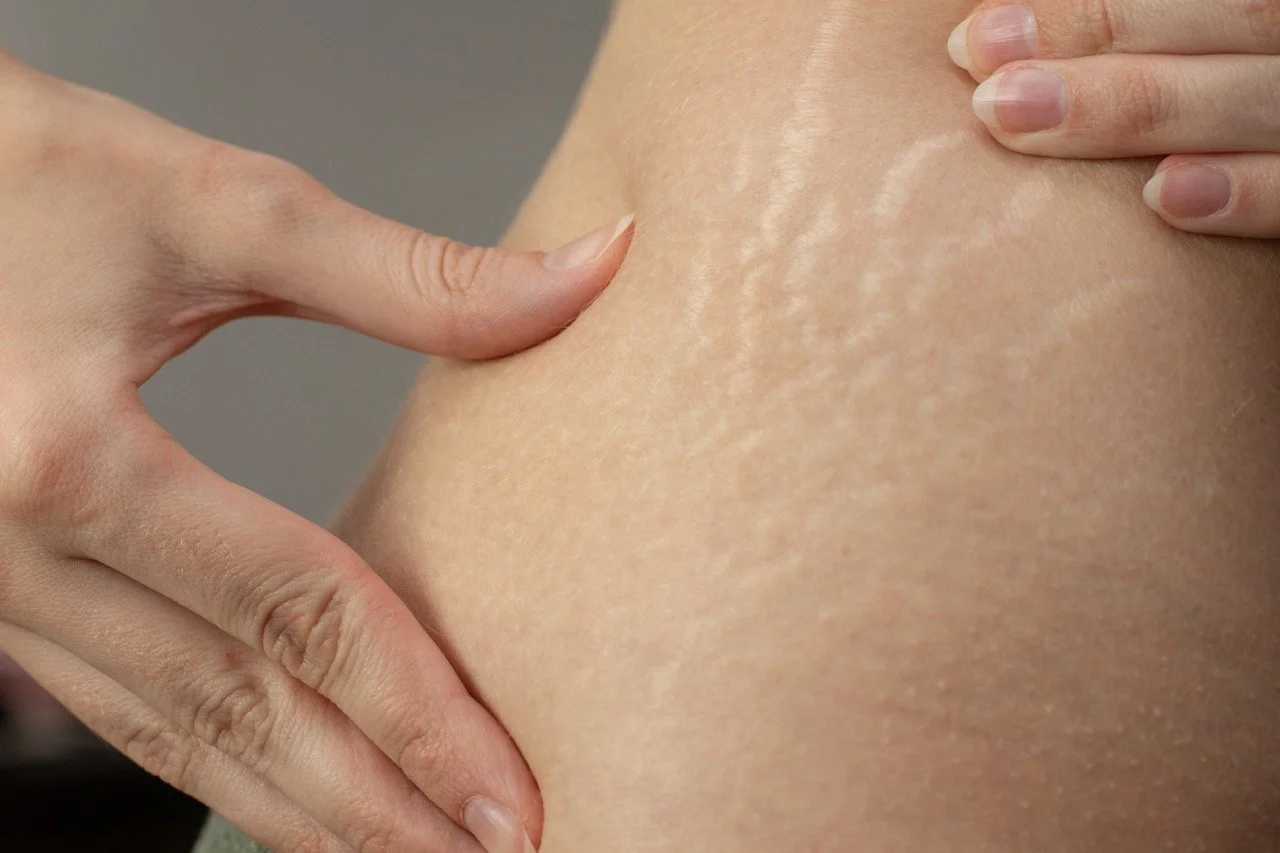
What are Stretch Marks?
Stretch marks, or striae, are a form of skin scarring that appear as linear, indented streaks on the body. They commonly occur on the abdomen, breasts, hips, buttocks, and thighs. While they are not physically harmful, stretch marks can cause significant self-consciousness, especially when they appear in prominent areas. Initially, these marks often appear red, purple, or pink (striae rubra), but over time, they typically fade to a silvery-white or flesh-coloured hue (striae alba).
How Stretch Marks Form
Stretch marks are the result of the skin being stretched beyond its natural elastic limit over a short period:
Dermal Tearing: When the skin stretches rapidly, the middle layer (the dermis) can tear. This allows the deeper blood vessels to show through, which is why new stretch marks often appear red or purple.
Collagen Disruption: The rapid expansion disrupts the normal production of collagen and elastin—the proteins that provide the skin with its structure and elasticity. As the skin attempts to heal these internal "tears," scar tissue forms.
Rapid Growth Phases: They are most commonly associated with pregnancy, puberty-related growth spurts, rapid weight gain, or significant muscle growth from intensive weightlifting.
Hormonal Influences: High levels of certain hormones, such as cortisol, can weaken the elastic fibres in the skin, making it more likely for stretch marks to form during periods of physical change.
How to Treat Stretch Marks
At Home: Jolanta’s Advice
While home treatments cannot fully "erase" a stretch mark, they are vital for improving skin resilience and the overall appearance of the marks:
Targeted Hydration: Use rich body butters or oils containing ingredients like Cocoa Butter, Shea Butter, or Vitamin E. Keeping the skin supple improves its elasticity and can help manage the texture of the marks.
Retinoid Creams: Topical Vitamin A (retinoids) can help stimulate collagen production and improve the appearance of newer, red stretch marks. Note: Retinoids should not be used during pregnancy or breastfeeding.
Supportive Nutrition: A diet rich in Vitamins A, C, and E, as well as Zinc and Protein, provides the biological building blocks necessary to support skin health and elasticity.
Exfoliation: Regular, gentle body exfoliation can help remove dead skin cells and improve the absorption of your hydrating topical treatments.
At SCA Clinic
We offer several advanced clinical treatments designed to remodel the scar tissue and stimulate the production of fresh collagen:
RF Microneedling (Sylfirm X): This is one of the most effective treatments for stretch marks. The microneedles create controlled micro-injuries while delivering radiofrequency energy, triggering a powerful healing response that smooths out texture and reduces discolouration.
Fractional CO2 Laser: This technology creates microscopic columns of heat in the skin to stimulate deep collagen production, helping to remodel the scar tissue and improve the skin's surface texture.
Platelet-Rich Plasma (PRP) Therapy: Often combined with microneedling, PRP uses your body’s own growth factors to accelerate the healing process and significantly boost collagen production.
Chemical Peels: Professional-grade peels exfoliate the top layers of the skin, which helps to refine skin texture and reduce the contrast between the stretch marks and the surrounding skin.
Mesotherapy: A bespoke cocktail of vitamins, minerals, and active ingredients is injected directly into the affected area to improve skin elasticity and hydration.
For the best results and choice of treatment, book a consultation with Jolanta, Aesthetic Nurse Practitioner, to create a personalised treatment plan.
